Imagination At Play on Day 2 of EA21 National Camp
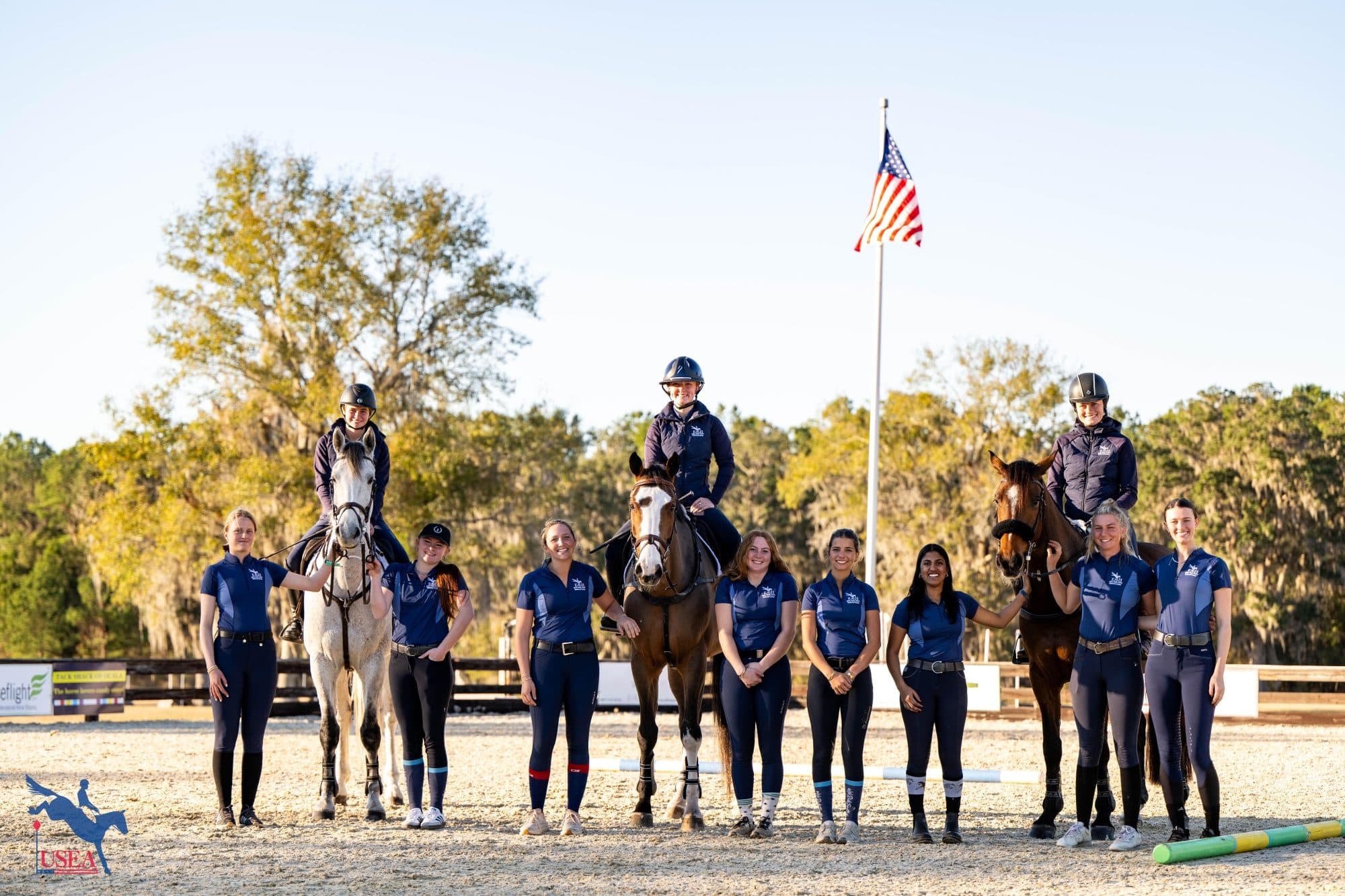
Ocala, Fla.—Dec. 31— There are three phases before reaching the level of mastery. The first is technique, or the how. The second is theory, or the why. The third is instinct, or the do. When all three come together, the boundaries of what is possible are limited only by the imagination.
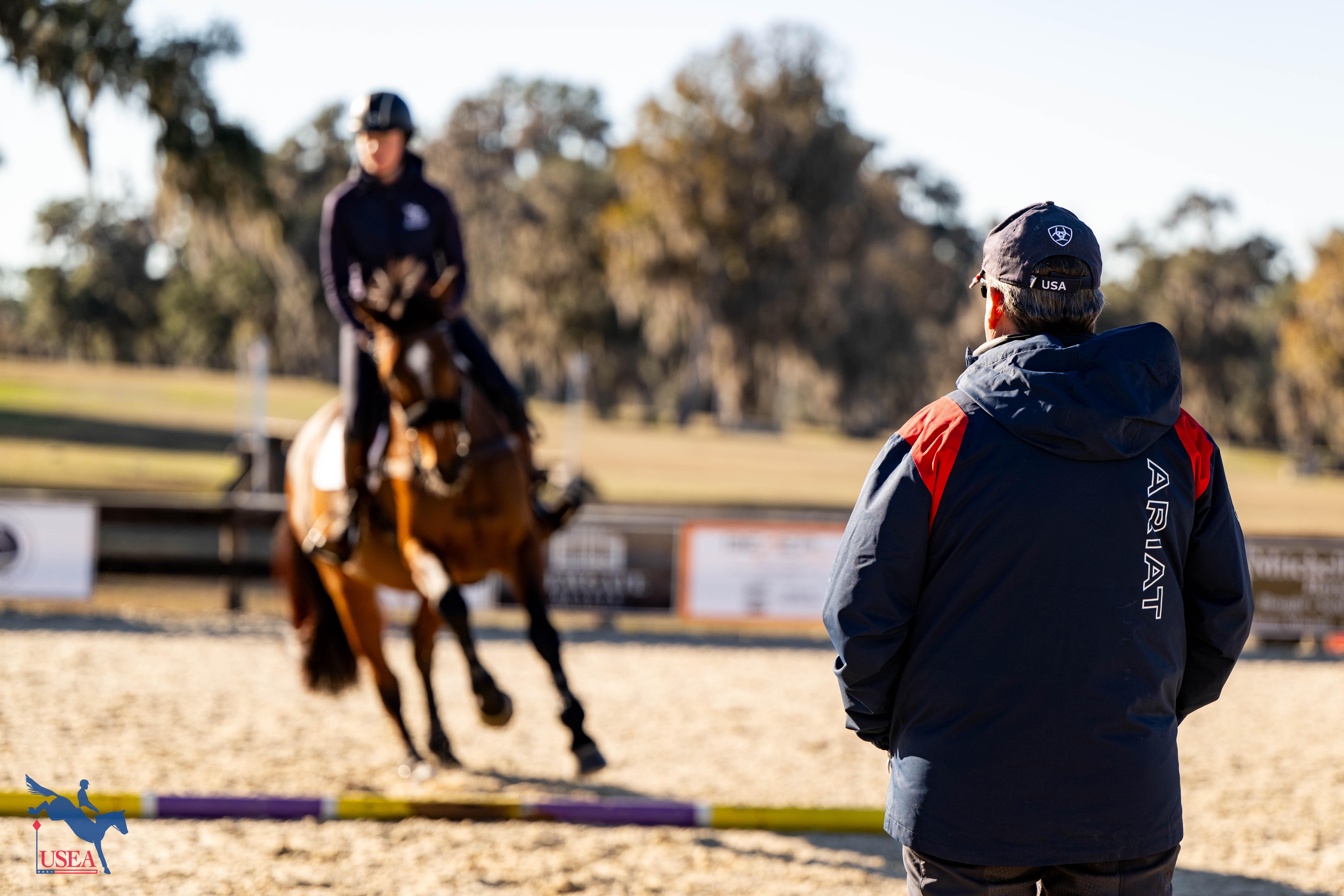
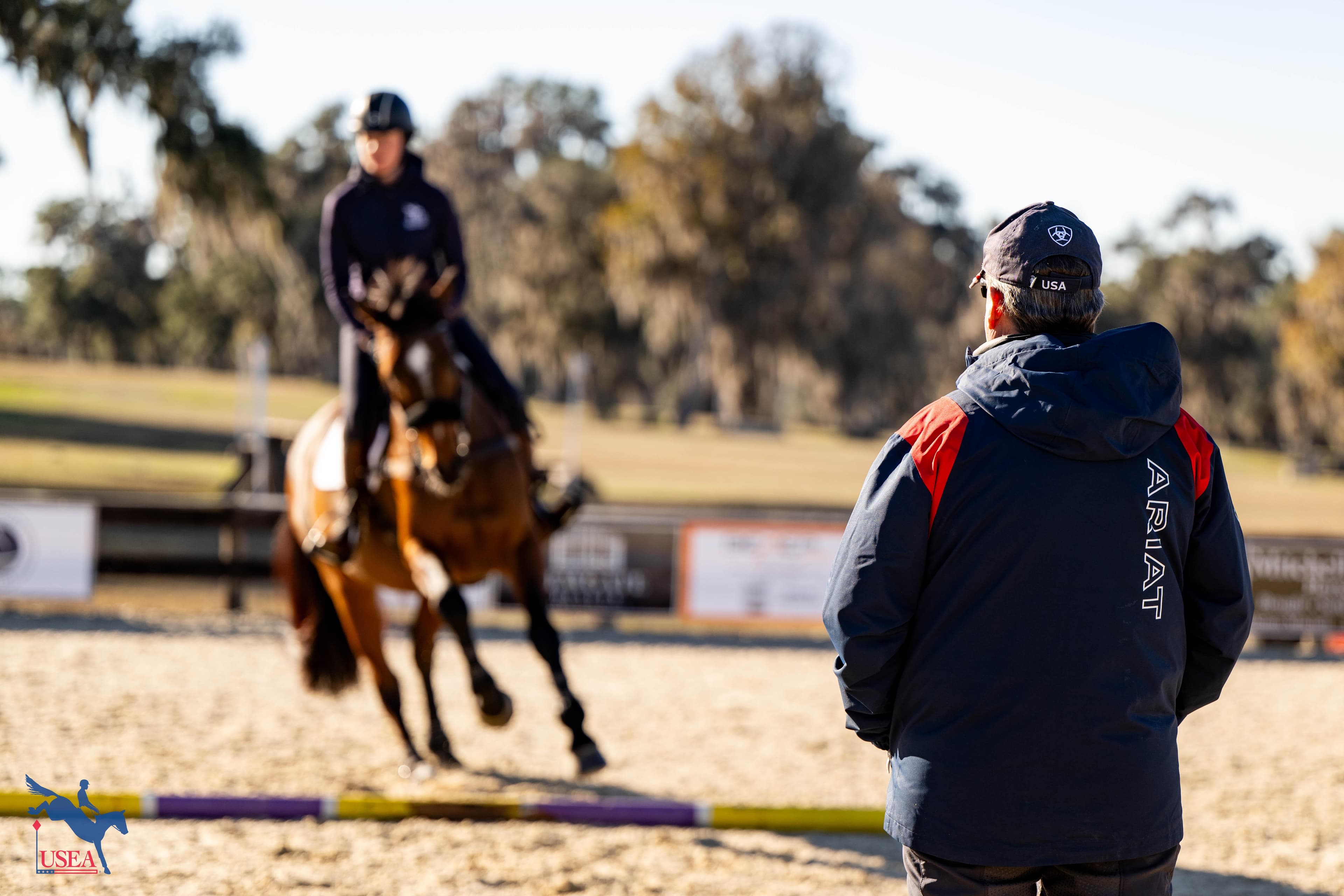
“Imagination is part of what gets you to the top because you start to see the field differently. Let it help you,” David O’Connor, Director of Coaching for the USEA Emerging Athletes Under 21 (EA21) Program, said in preparation for the day of pole work. “What would happen if I did four strides here? What about three? It’s only three inches off the ground. Practice the imperfect: that’s how you get rideability.”
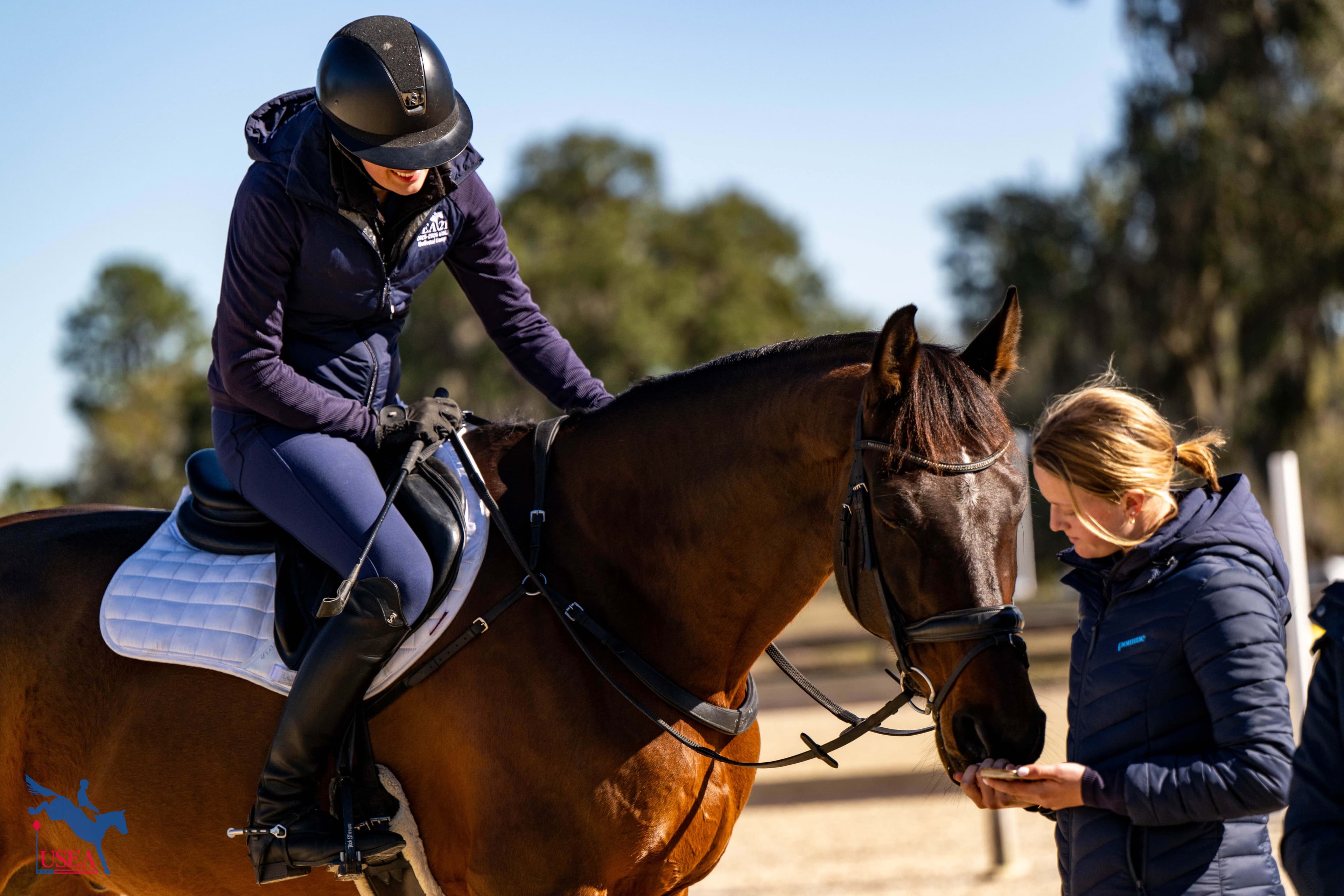
Building off the previous day’s work of simplifying language, both for the rider’s theory and communication with the horses, O’Connor had them begin in the same mindset. What were they asking of the horses? What were the answers they were getting? He made sure riders took the time to ensure communication lines were open. For some riders, that was a short amount of time. For others, it took a little longer. But giving that space for horse and rider to align on the same page set partnerships up for success for the exercise ahead.
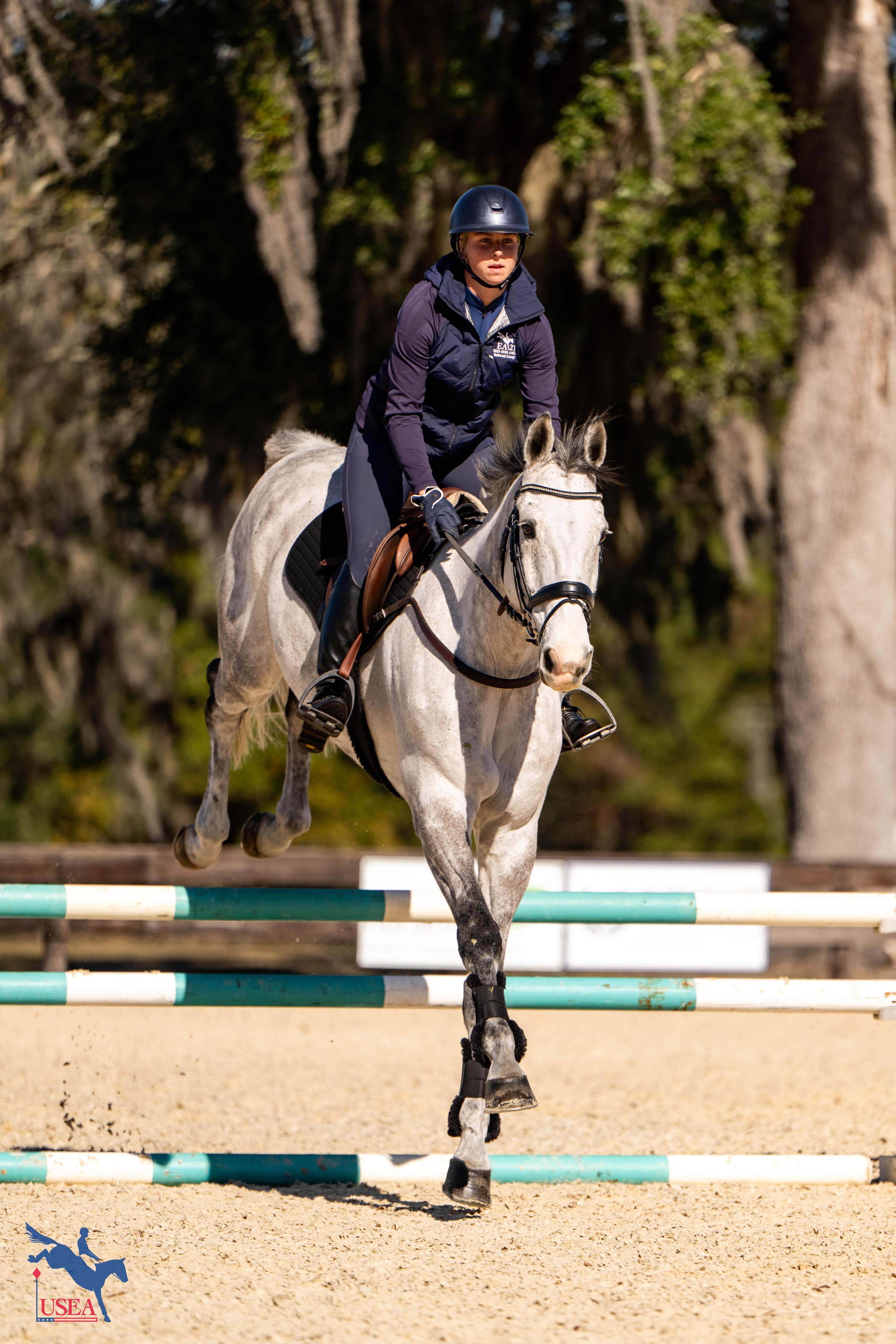
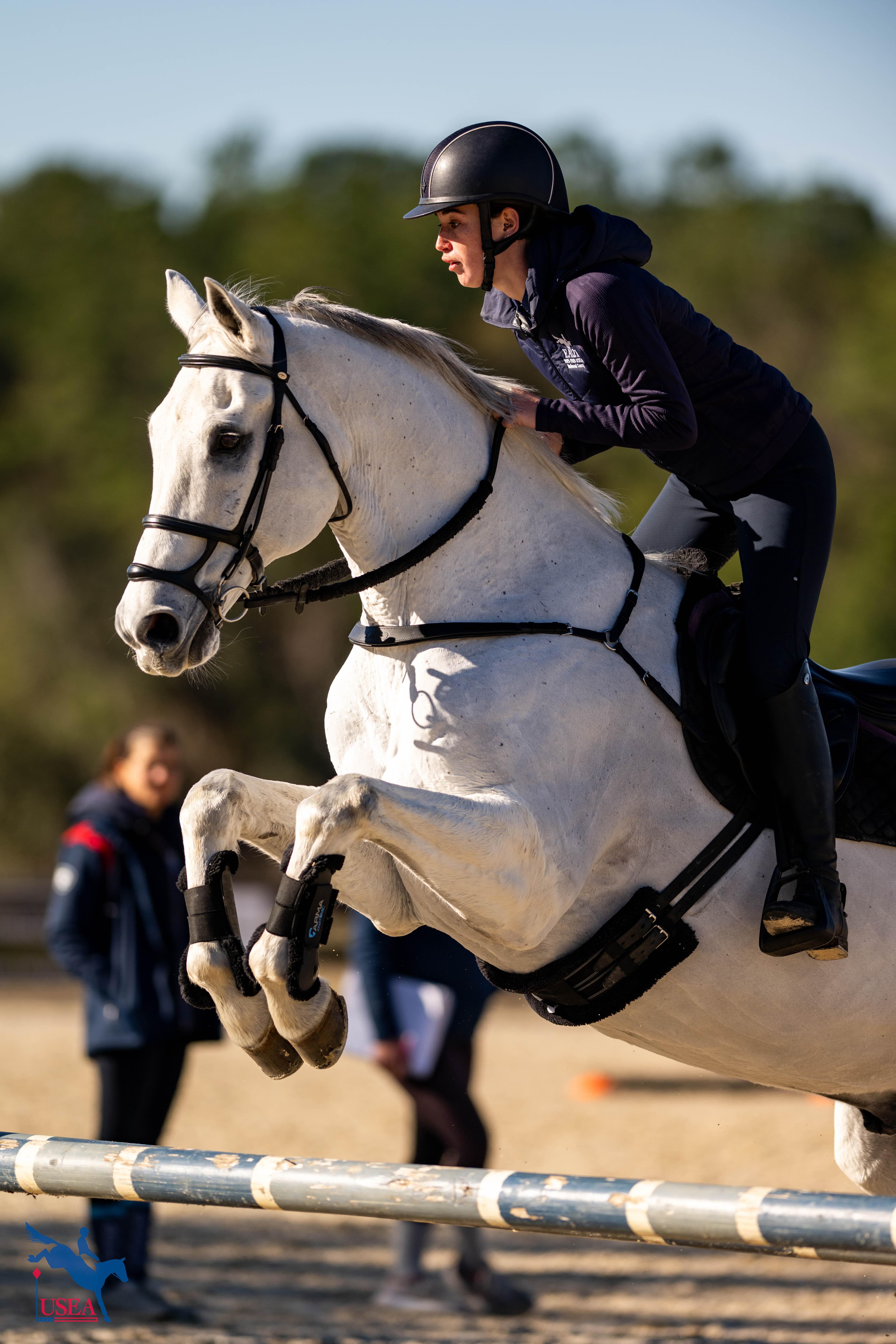
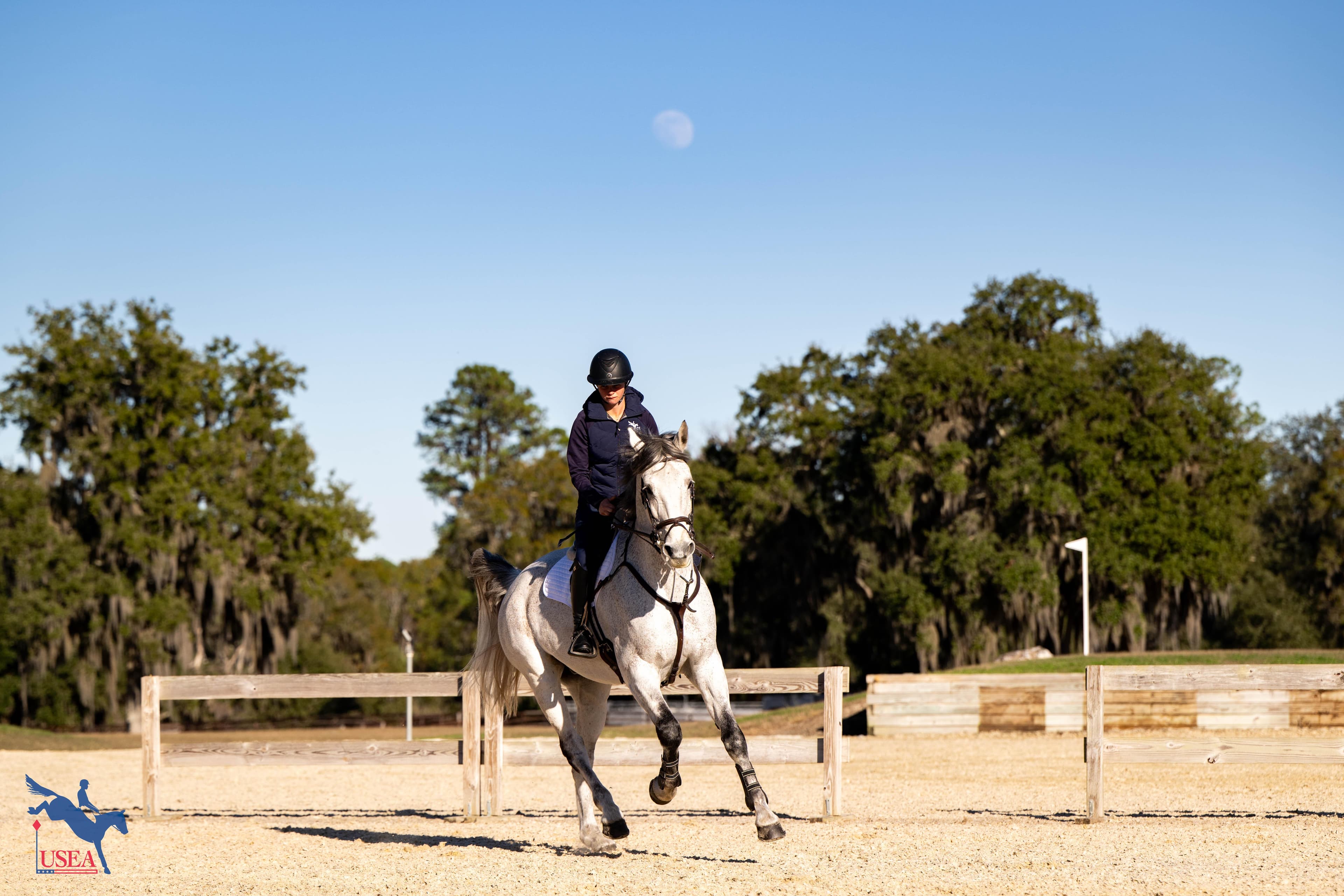
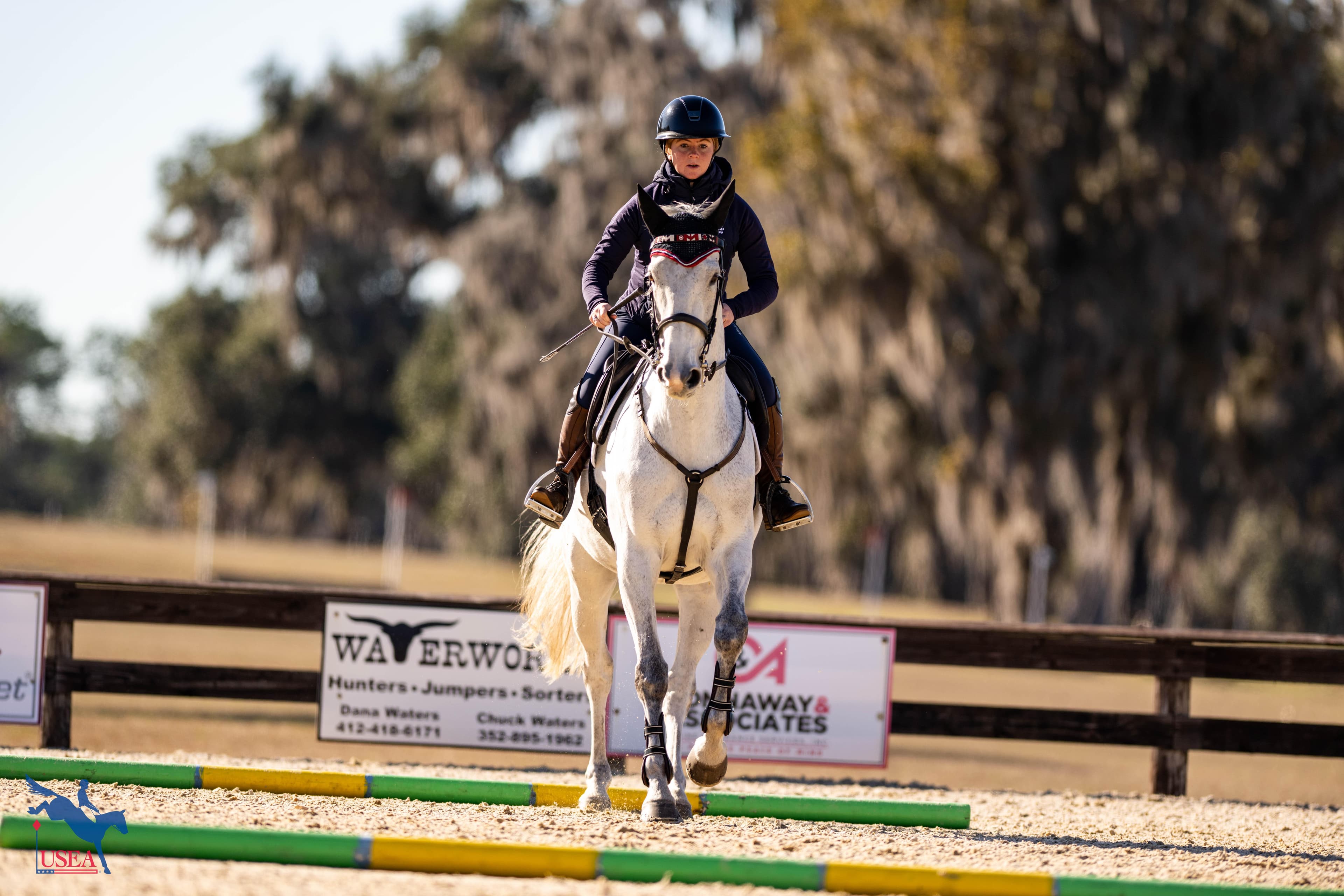
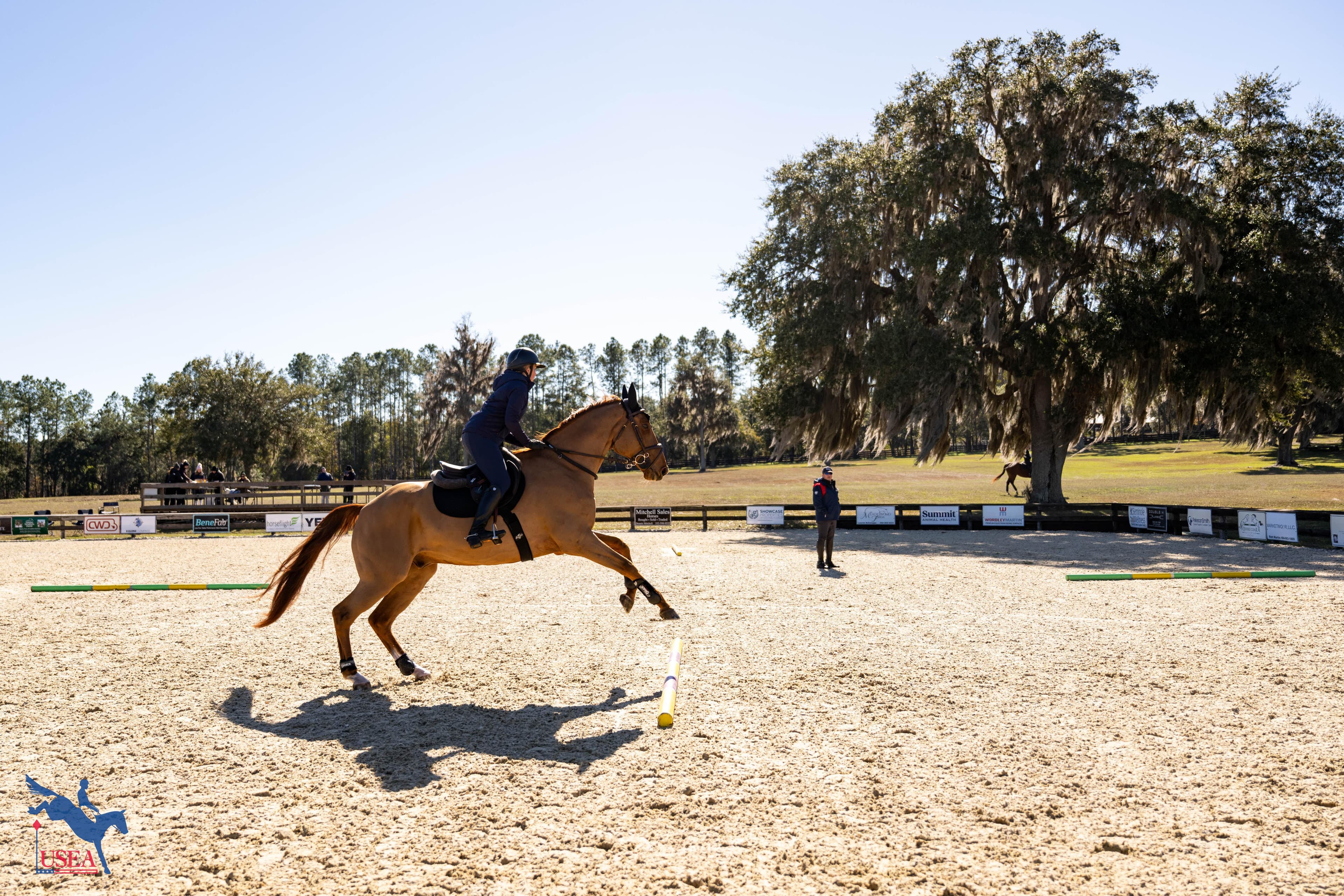
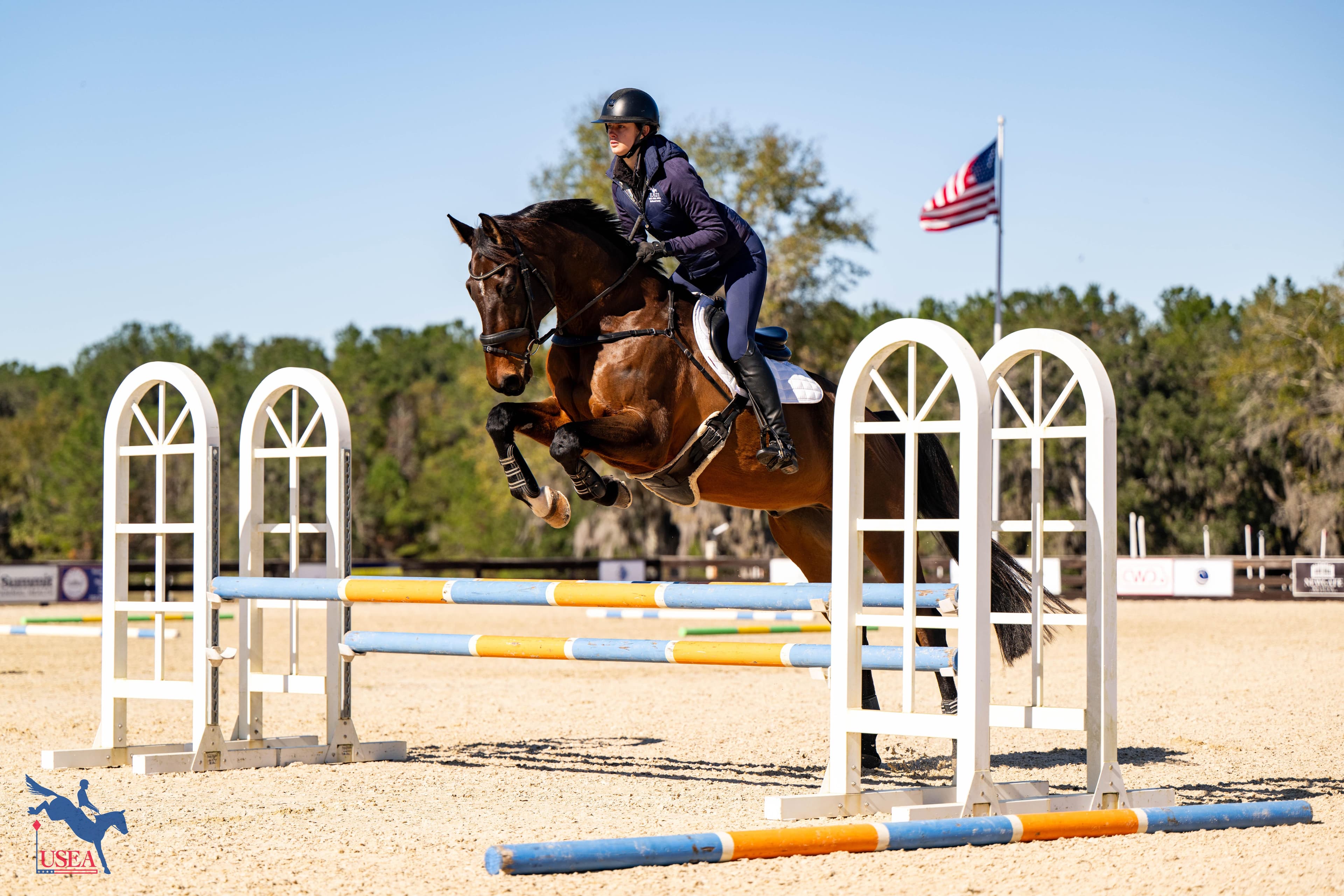
Of those exercises, there were three. One was a series of four poles set equidistant on a circle (4 strides from center to center, 3 from the inside end, and 5 from the outside), also known as a circle of death. The second was four poles set along the sides of a square, one side set at 42’ and the other at 33’, and riders must fit four strides in the 42’ side and three in the 33’ side on a continuous cross pattern. The third was a jumping line made up of a vertical set four strides to an oxer set five strides to a second oxer.
Starting with the circle, riders began with two poles, maintaining a consistent rhythm. When that was comfortable, they graduated to three, then to four from center to center, striving for four strides between each pole. As confidence grew, he asked them to play with moving to the outside ends to get five strides and then the inside end to get three.
"You have to practice technique," he remarked. “Don’t expect that you have it.” He encouraged the athletes to treat the technique practice like play, not letting the pressure of perfection keep them from communicating clearly and calmly to their mounts.
For Sierra Fishell, O’Connor’s knowledge is opening her perspective. “I love his approach towards everything. It's very much like he's in the horse's mind and understanding them, what they know and what they don’t.”
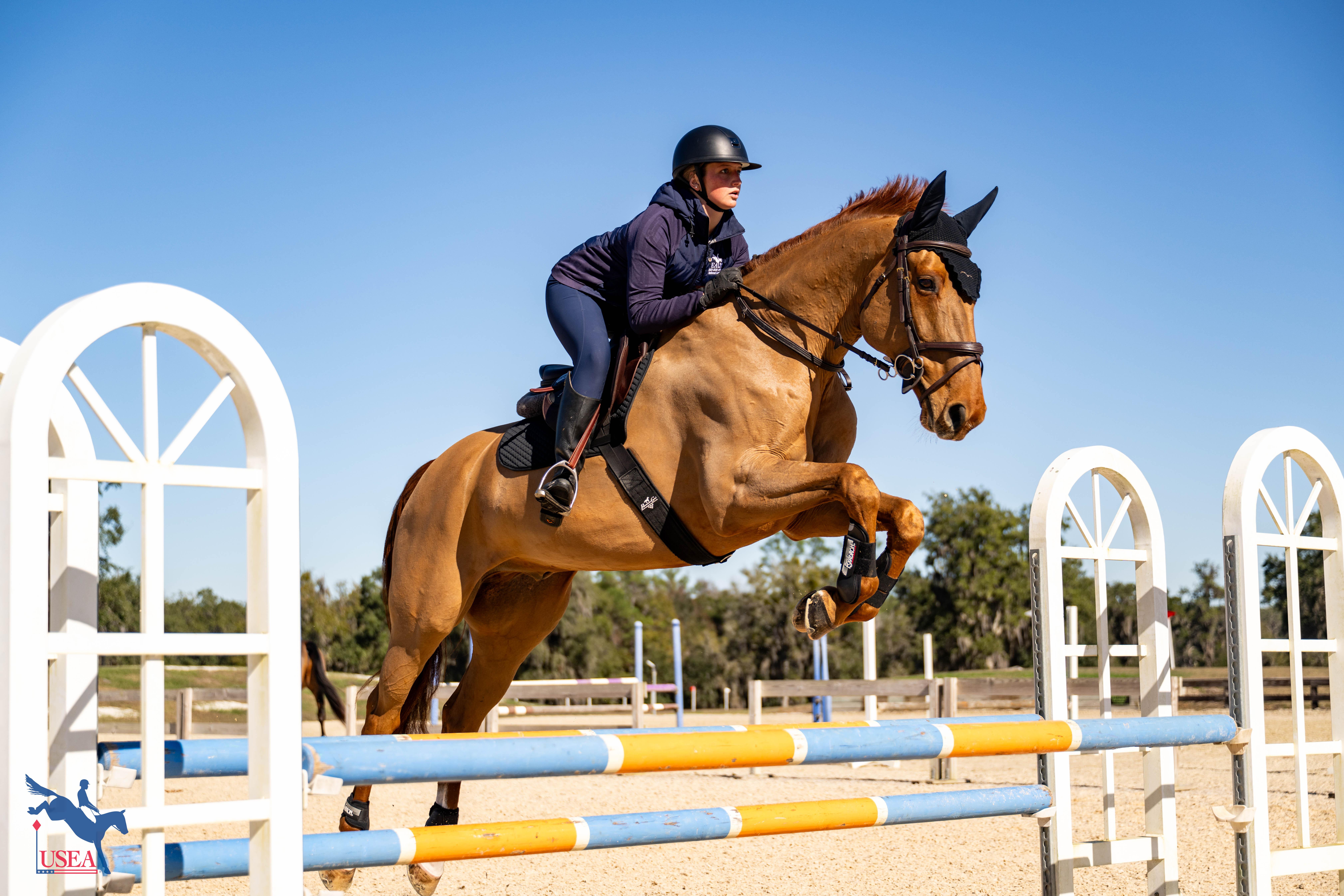
It’s her first time attending the National Camp and she feels a change in herself from the Sierra who applied for EA21. “I think [I am now] a lot more understanding of the horses. It's not just a sport anymore; it's more of a partnership. Each horse that you get on, it's getting on to try to understand how to help them be the best that they could be for the ride, not just getting on and having these high expectations.”
That knowledge of the horse came in handy during the square exercise. Some riders began with the three-stride line to come in positively for a horse who tended to be slower to energize. Others began with the four-stride line to help an excited horse find calmness.
Willow Schwartz, attending for her second year, liked the box exercise. “I really enjoyed it! I understood [the theory] more this go around. I’m finally realizing how to use my seat to make him shorten or lengthen evenly without a lot of hand and body movement, just keeping it subtle, but really effective.”
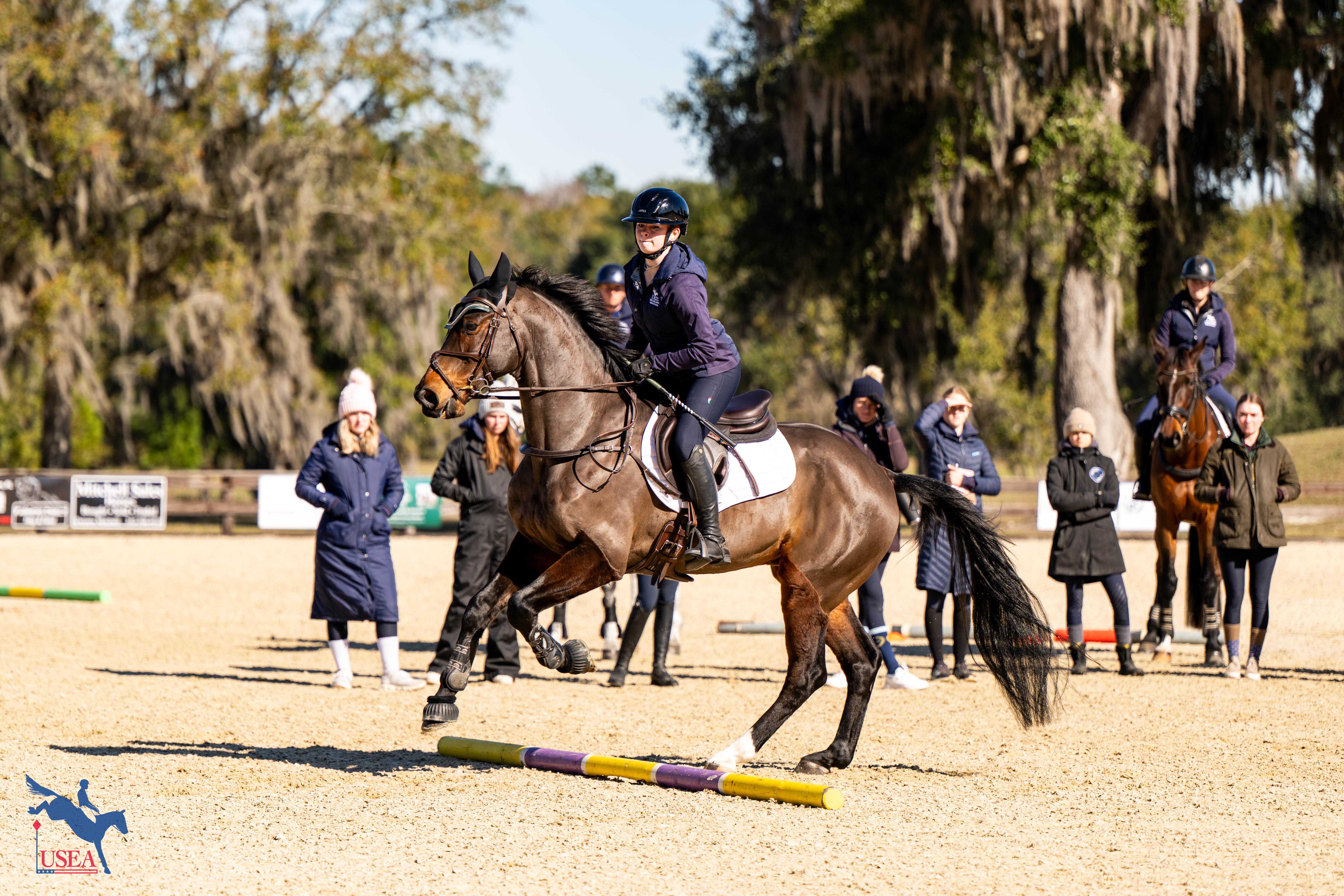
When asked what she was hearing differently this year from last, she credited a mental change: “[EA21] really made me evolve and grow as a rider. My thought process of how to assess something that went wrong and improve it has really matured. I used to get a little bit frazzled and nervous about messing up, trying to fix it quickly without understanding what happened and what I needed to do to actually improve overall. I think every single piece of information I get has been able to stick with me more than it has in the past.”
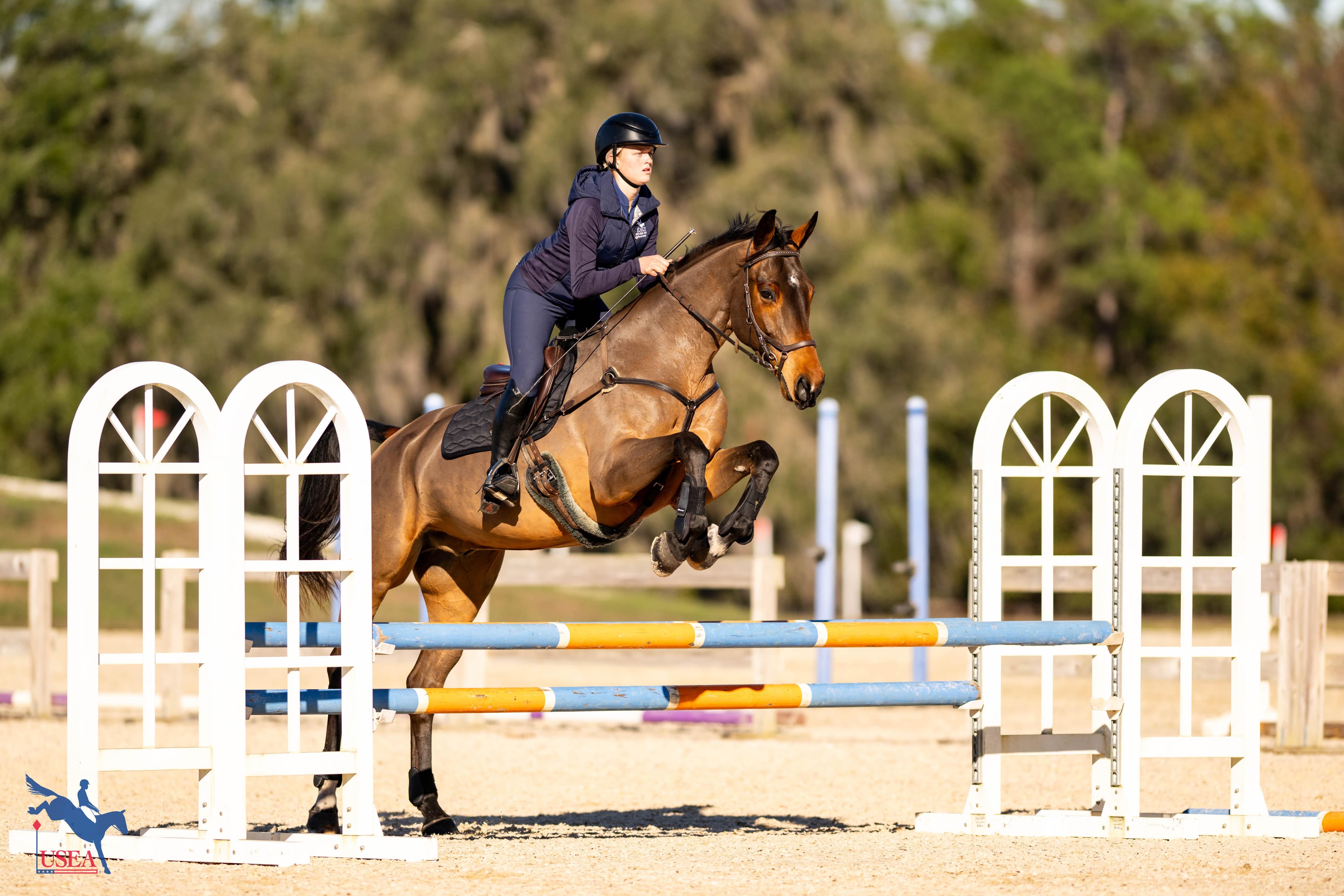
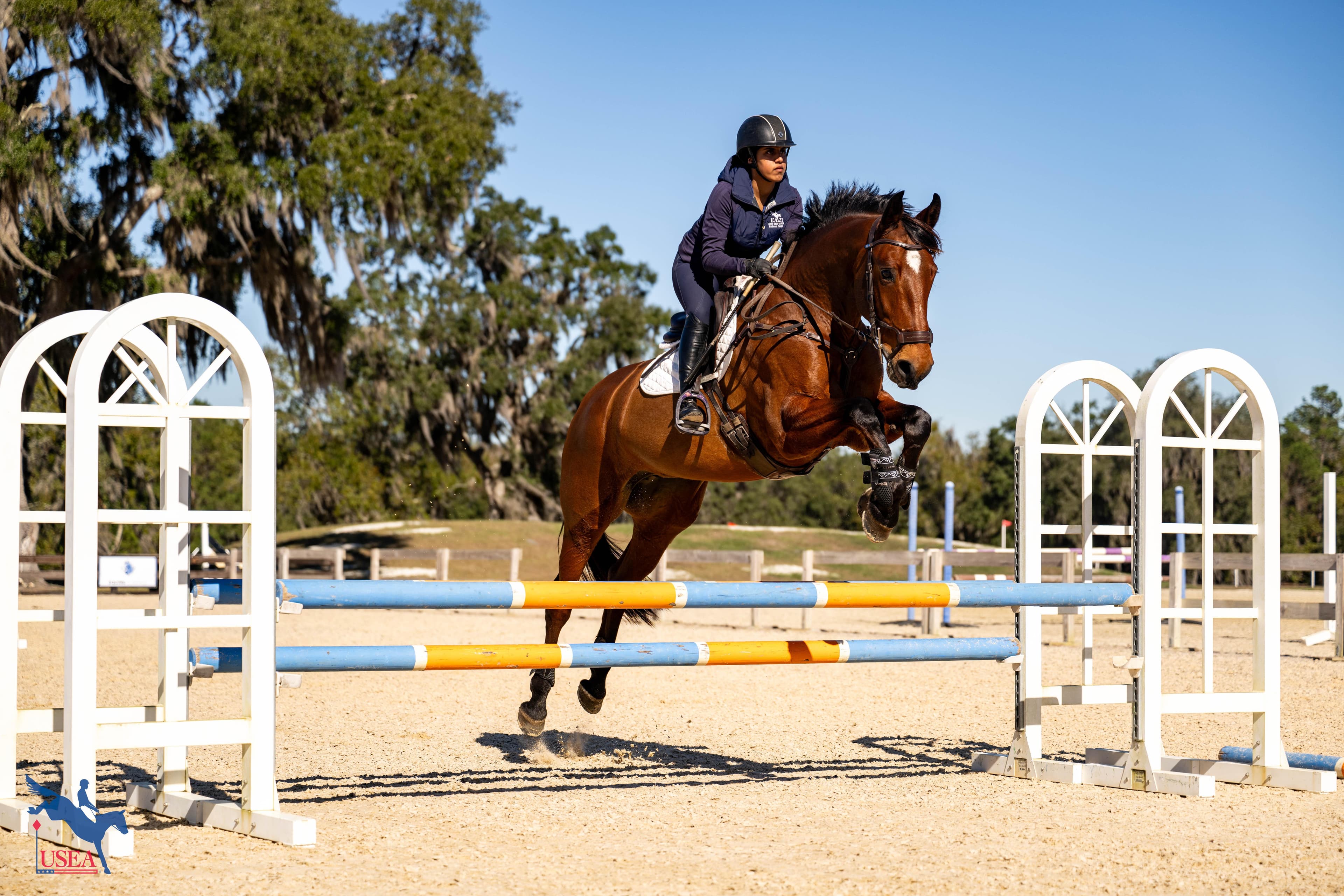
After the box exercise, riders figure-eighted the final oxer of the jumping combination, working on imagining their lines and how they could improve their approach for a better jump. Once that play was complete, they finished the ride by completing the whole line, cementing the fundamental rider responsibilities of managing direction, speed, rhythm, and timing.
In addition to their riding and lectures by David O’Connor, participants were also treated to a lecture by Dr. Lisa Casinella, who has served as official USA team vet to the show jumping, driving, and vaulting teams. She encouraged them to take the time every day to learn their horses’ bodies, be good horsepeople, and know what was normal for their physical conditions. Just as O’Connor asked for feel in their communication, she asked for feel in their hands, to know what was unusual warmth or swelling and what was normal for their own horse’s pathology. Observation, both in communicating with the horse and in their care, was the best tool they could use to keep their partners healthy, happy, and sound.
Quick Links:
- Meet the EA21 National Camp Athletes
- 2025-2026 EA21 National Camp Fast Facts
- Learn more about the USEA EA21 Program
About the USEA Emerging Athlete U21 Program (EA21)
The purpose of the USEA Emerging Athletes U21 Program (EA21) is to identify and provide consistent quality instruction to the next generation of elite event riders. The aim is to create a pipeline for potential team riders by identifying and developing young talent, improving horsemanship and riding skills, and training and improving skills and consistency.
The USEA Emerging Athletes U21 Program was launched in 2022 with a model of five summertime regional clinics taught by carefully selected USEA Eventing Coaches Program (ECP) coaches, leading to a winter national camp consisting of selected Young Riders from the regional clinics. Athletes who are 21 years or younger, are current members of their USEA Young Rider Area program, and are established at the Training Level or higher, are eligible to apply for the EA21 program. Click here to learn more about the USEA EA21 Program.
The USEA would like to thank ARMA, Bates Saddles, GGT Footing, Horse Illustrated, Kerrits, PulseVet, Ride iQ, Schneiders Saddlery, Sidelines Magazine, WeRideTogether, and YETI for sponsoring the USEA Emerging Athletes U21 Program.


Related Articles

Registration Now Open for 2026 USEA Annual Meeting & Convention and U.S. Eventing Hall of Fame Induction Ceremony in Arlington, Virginia
Registration is now open for the 2026 USEA Annual Meeting & Convention, which will include the U.S. Eventing Hall of Fame Induction Ceremony Dinner, on December 11-13 in Arlington, Virginia. Interested members are enco...
USEA Names Athletes for Winter 2026-2027 EA21 National Camp
The United States Eventing Association (USEA) is pleased to announce the 12 young athletes selected for the 2026-2027 USEA Emerging Athletes U21 (EA21) National Camp. Following five regional clinics held across the country this summer, these athletes have been invited to continue their developmen...
New Ways to Give Back to the USEA Programs You Love
The United States Eventing Association (USEA) is pleased to introduce a new way for members and supporters of the sport to give back to the programs that mean the most to them.