Teaching The Teachers at the USEA Spring ECP Workshop
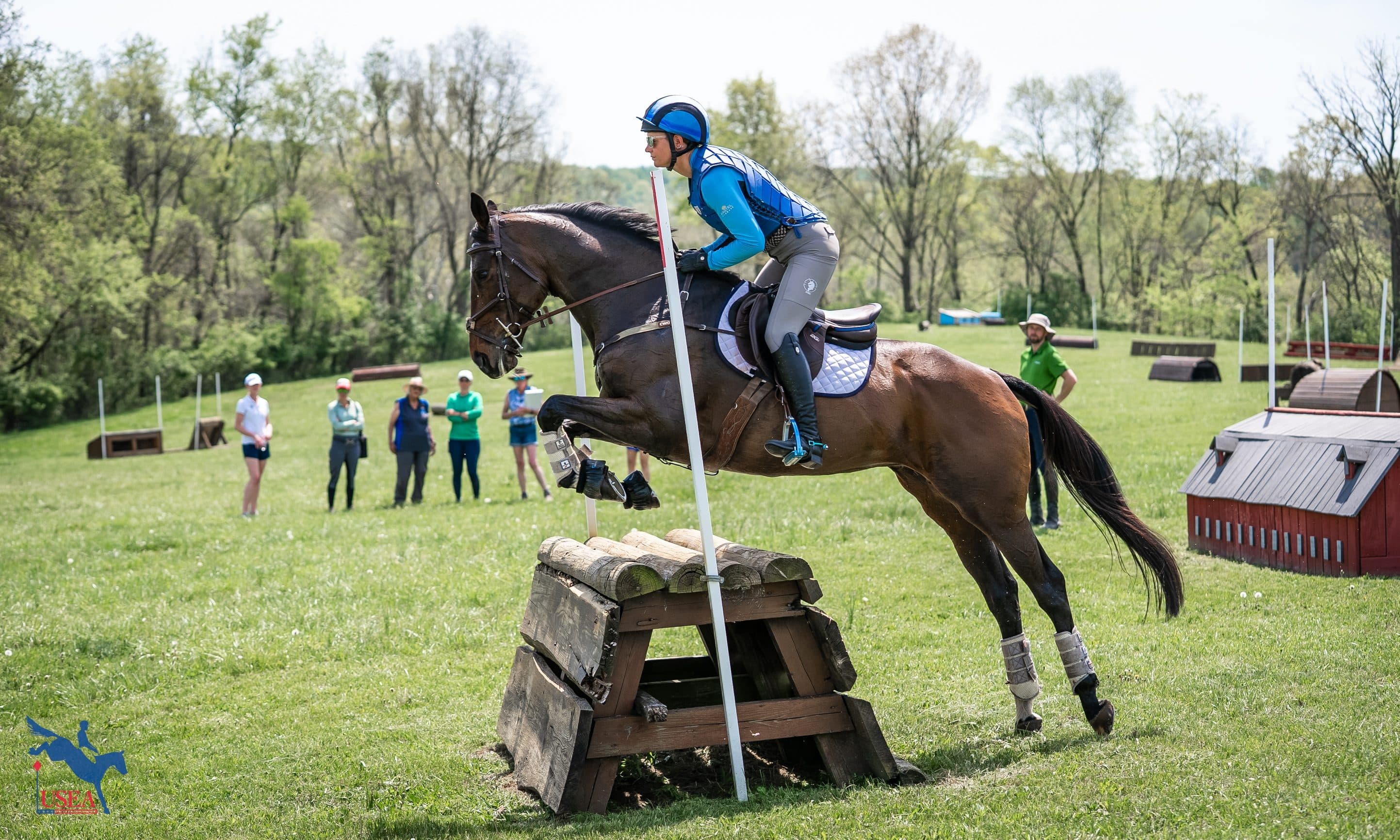
The USEA Eventing Coaches Program (ECP) aims to produce and improve the craft and art in the teaching of riding and horse management through a pathway of workshops, assessments, and ultimately, certification of coaches.
This week, Destination Farm and Loch Moy Farm in Maryland served as hosts to an ECP Workshop, presented by the United States Pony Club, where three ECP candidates and several auditors were welcomed to three days of learning about each phase of eventing.
ECP faculty member Phyllis Dawson led the sessions, teaching demo lessons and giving feedback as each candidate taught their own lessons.
Day 3 was all about the heart of the sport, cross-country, utilizing Loch Moy’s schooling course.
Dawson started the day by speaking about the evolution of teaching. Back when she was competing, which included a trip to the 1988 Seoul Olympics, she says there wasn’t a lot of formal instruction available.
“There’s so much more instruction available to people now, and people are willing to get the instruction,” she said. “But still, a lot of people don’t really know how to teach cross-country. It was always just, ‘Go get ‘em, and kick on,’ and a certain amount of that attitude is important for cross-country—you have to be able to ride scrappy and ride bold, but there’s a systematic way of teaching the mechanics of how to gallop a horse, how to make a transition, and how to jump different types of fences. And that doesn’t mean that there’s not a lot of feel involved and a lot of art involved in it, but we want to be able to teach the riders the mechanics and the system.”
Dawson then spoke about the mechanics of the three galloping positions—a key concept in the "ECP Eventing by the Levels Handbook." “People maybe realize it but don’t break it down and analyze it to be able to teach it,” she said.
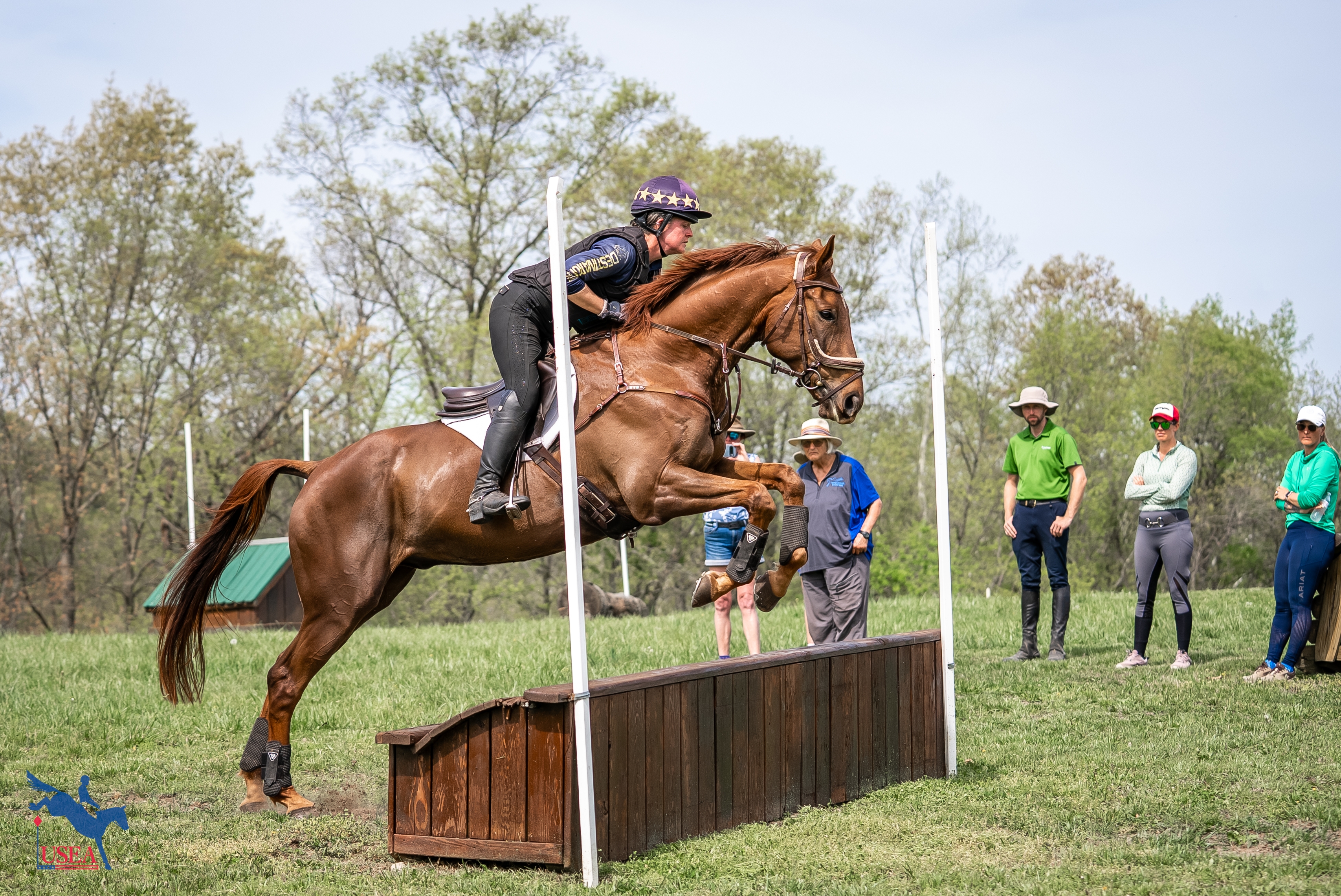
In between fences, riders should be up in a two-point, with the stirrup just behind the ball of the foot, seat up above the saddle, knees not locked but relatively straight, and their hands close to the horse’s neck
“Most low-level riders aren’t really comfortable in a galloping position,” said Dawson, who encourage the candidates to start in a smaller area of a cross-county field. “I learned to use a double-bridge on cross-country. I like the bridge. Some people do; some people don’t. I think it’s a little less common than it used to be.”
As the rider transitions from a gallop in between fences to a more balanced jumping canter, they should come upright with their body. “This is where many riders try to sit down,” she said. “You can’t sit down—you’ve got to stand up. The body comes more upright and vertical. Your hand may or may not raise depending on the horse’s head position.”
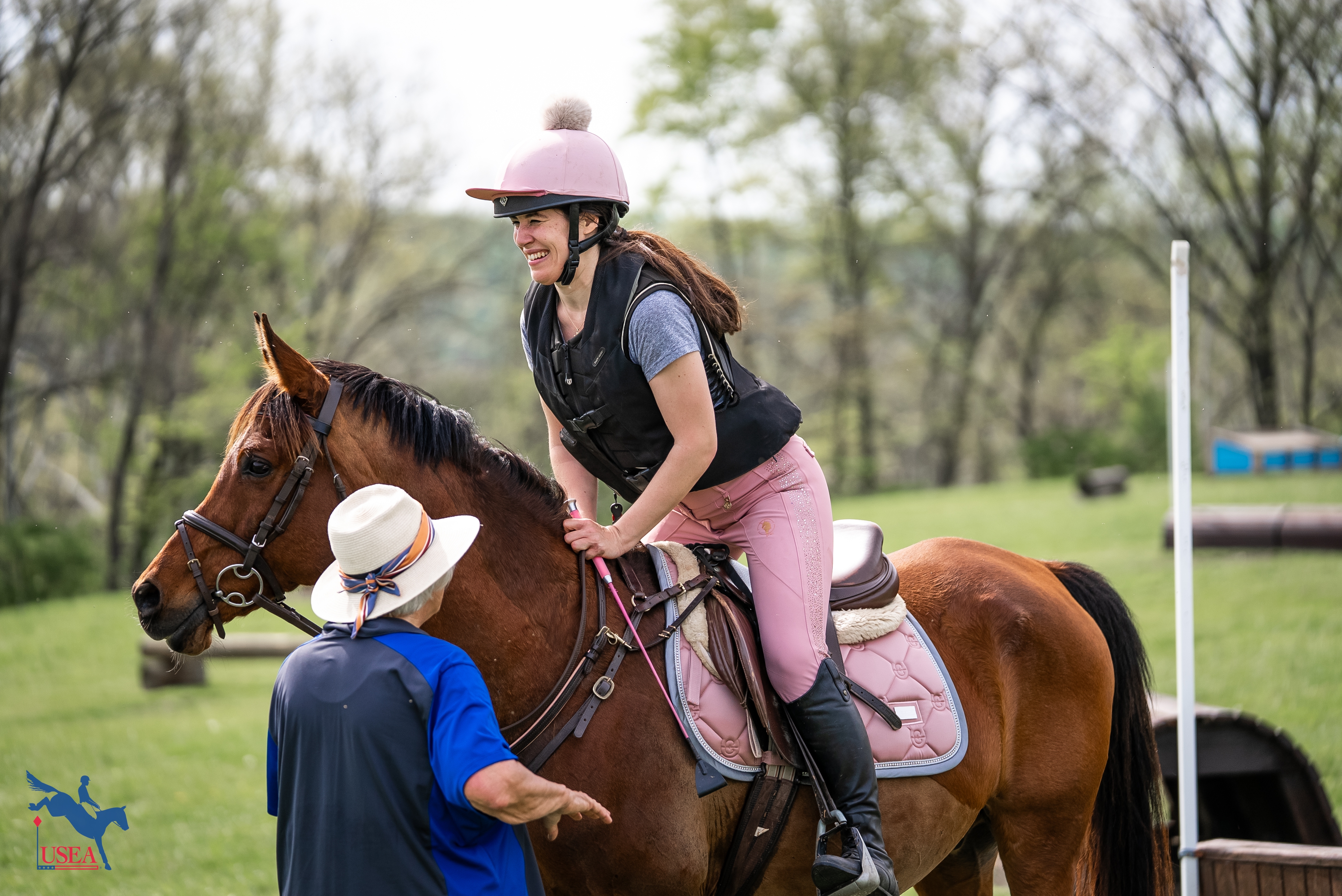
The transition should involve closing the leg and sitting up to have the horse come back, not pulling.
“In most cases, if you use your body correctly, you won’t have to pull as much, but yes, sometimes you might need a check,” she said. “Standing and pulling is not correct.”
The rider then changes position to come closer to the saddle as the horse gets ready to take off, and in most cases, Dawson said the rider should not be sitting in the saddle. If it’s a spooky jump or a downhill question, then it might be appropriate.
Dawson also discussed the need for a horse to have different canters for show jumping and cross-country, which is where rider position is key. If there’s straightness, balance, a connection to the bridle, impulsion, and acceptance of the aids, the transitions between those canters should come easy. A variety of “gears” will come in handy on cross-country where terrain is involved. A show jumping canter is going to stay relatively consistent in balance.
As Dawson and the group headed out to the cross-country field to teach, she reminded the candidates that setting the horses and riders up for success was key.
Getting Feedback
At the start of each lesson, candidates checked tack, asked questions about the horse and rider pair, then reminded them that if they were ever feeling overfaced, they should speak up. The demo riders ranged from Starter to two-star pairs, each with their own challenges they wanted to work on.
Each candidate identified issues or weaknesses as the riders warmed up, speaking their thoughts out loud to the group, and Dawson critiqued their style of delivery and offered advice about each pair from her perspective.
Dawson made sure to emphasize that the riders should warm up thoroughly on the flat, getting correct transitions into trot and canter with good connection before they started jumping. Then each rider warmed up over single jumps before putting together a few jumps.
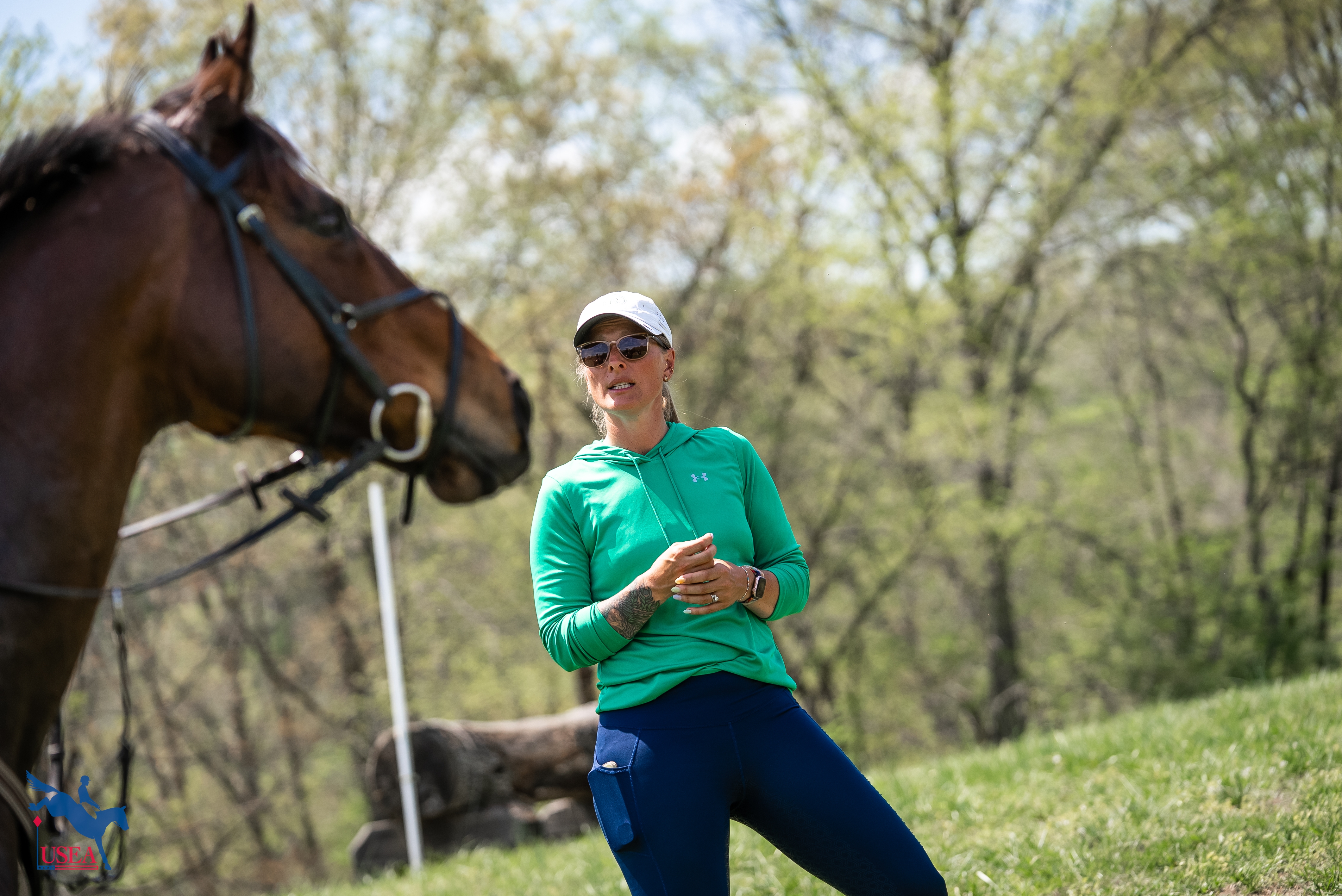
Hannah Schofield, a trainer in Lovettsville, Virginia, is pursuing ECP certification because she’s had some friends go through the program and wanted to amp up her teaching. Though it’s been difficult for her to pursue due to scheduling and time constraints, she was able to fit in the Workshop this year after it was reduced from six to three days.
“I feel like there is a mass population of kind of mid-level riders and trainers that train lower-level riders, where we just get a little bit stuck in the day to day,” she said. “I teach a lot of lessons to the same students over and over. I don't really do a ton of clinics and things like that. So, getting in front of some different students with some other instructors and getting some fresh ideas and approaches just seemed like, why not? It would be good addition to my program.”
With unseasonably summer-like heat over the past week, Schofield said the days were long, but she wanted to attend all three days to get the most she could out of the experience.
She enjoyed teaching lessons to a variety of horses and riders over the three days. “I’ve taken a lot of cross-country lessons with a lot of different riders over the years myself, and you kind of take a little bit of everything you hear. There shouldn't be any original thoughts at a certain stage in your career, and it's not like I've necessarily heard anything totally new, but the emphasis is different for each person and certainly for this program. So, it's been really interesting, especially hearing Phyllis today talking about the canter and wanting the lessons to be so based on the canter.
“I've come to this schooling course probably monthly for years with my students, and we kind of whizz around and jump a lot of jumps and answer a lot of questions, but I don't think I've ever spent 25 minutes working on one person's canter before they even start jumping. I see tremendous value to that. So that was the big takeaway for me today,” she added.
Patty Clucas came from her farm in New Jersey to see what the ECP was all about. After years of teaching, she’s taken a break in recent years and is considering getting back into it. She opted to participate to find out how she compared to other coaches and see if she was on the right track.
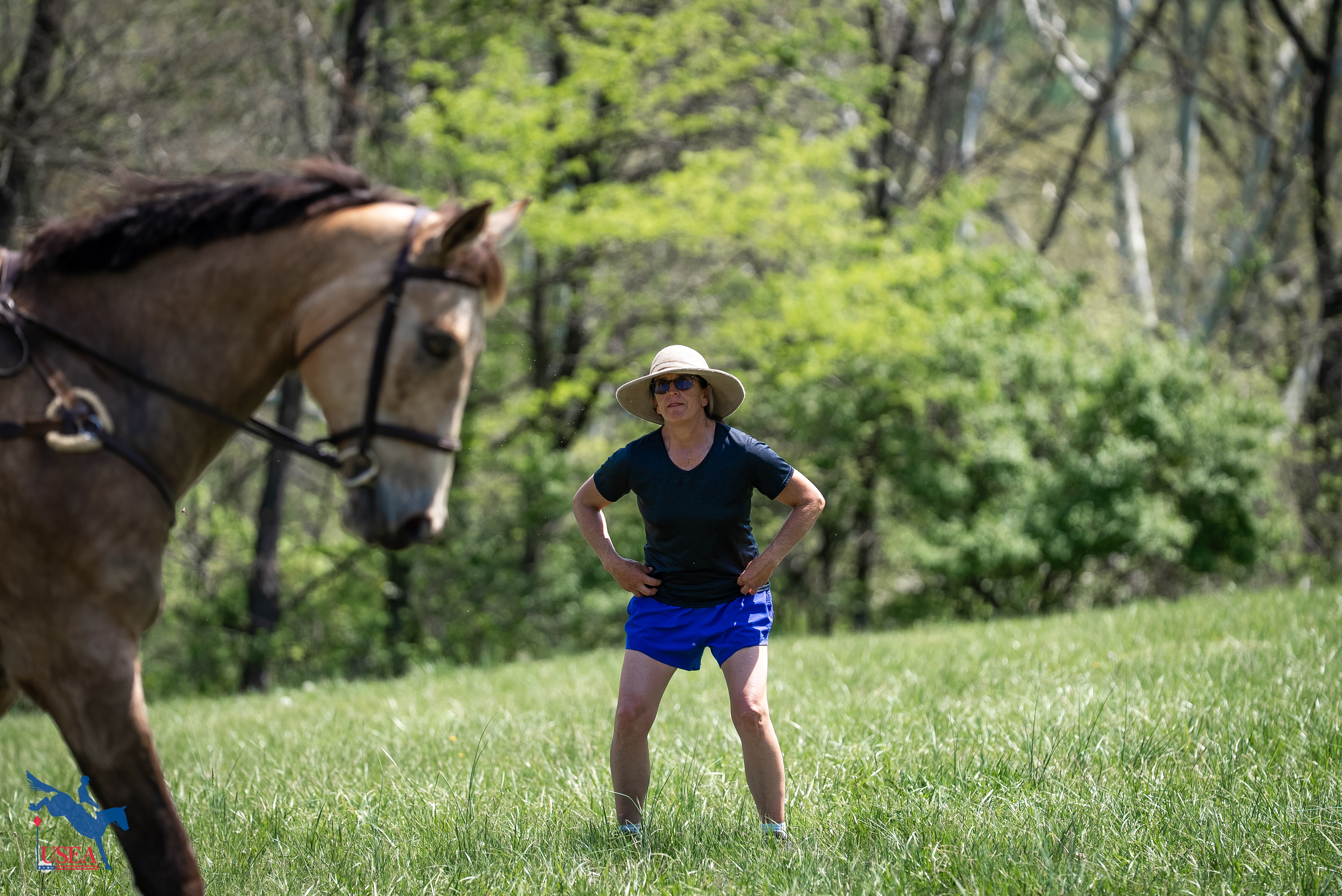
“It was a little out of my comfort zone but got better as I was going along. It was an excellent learning experience,” she said. “I wanted to feel that I'm doing it correctly. Anyone can hang the sign out and give lessons, and that's what I've always done, mostly for beginner riders. So, it was important to me to get a sense that my thoughts when I'm watching people ride are along the right lines, that I'm not way off base.”
Michael Willham came from Cleveland, Ohio, to pursue his certification. He works a full-time job in the commercial roofing industry but teaches lessons on the side and has competed through the three-star level.
While he says that there are plenty of eventing coaches in Northeast Ohio, he wanted to share his knowledge with a small group of students.
“[ECP is] unique in that there's not a whole lot of training, the trainer. It's all just, take a riding lesson, or maybe you audit or do lessons and clinics—that's how I've developed over the years,” he said. “Both my own riding and my own teaching is watching tons of lessons, knowing what I've been taught, knowing what's worked and what hasn't worked for me. So when I saw this [workshop], I said, OK, let's do it. I wanted it to help not just my own riding, but my coaching. I also launched an online masterclass a few years ago, so I thought it would be really helpful to get new perspectives on coaching and everything as I create more videos for that.”
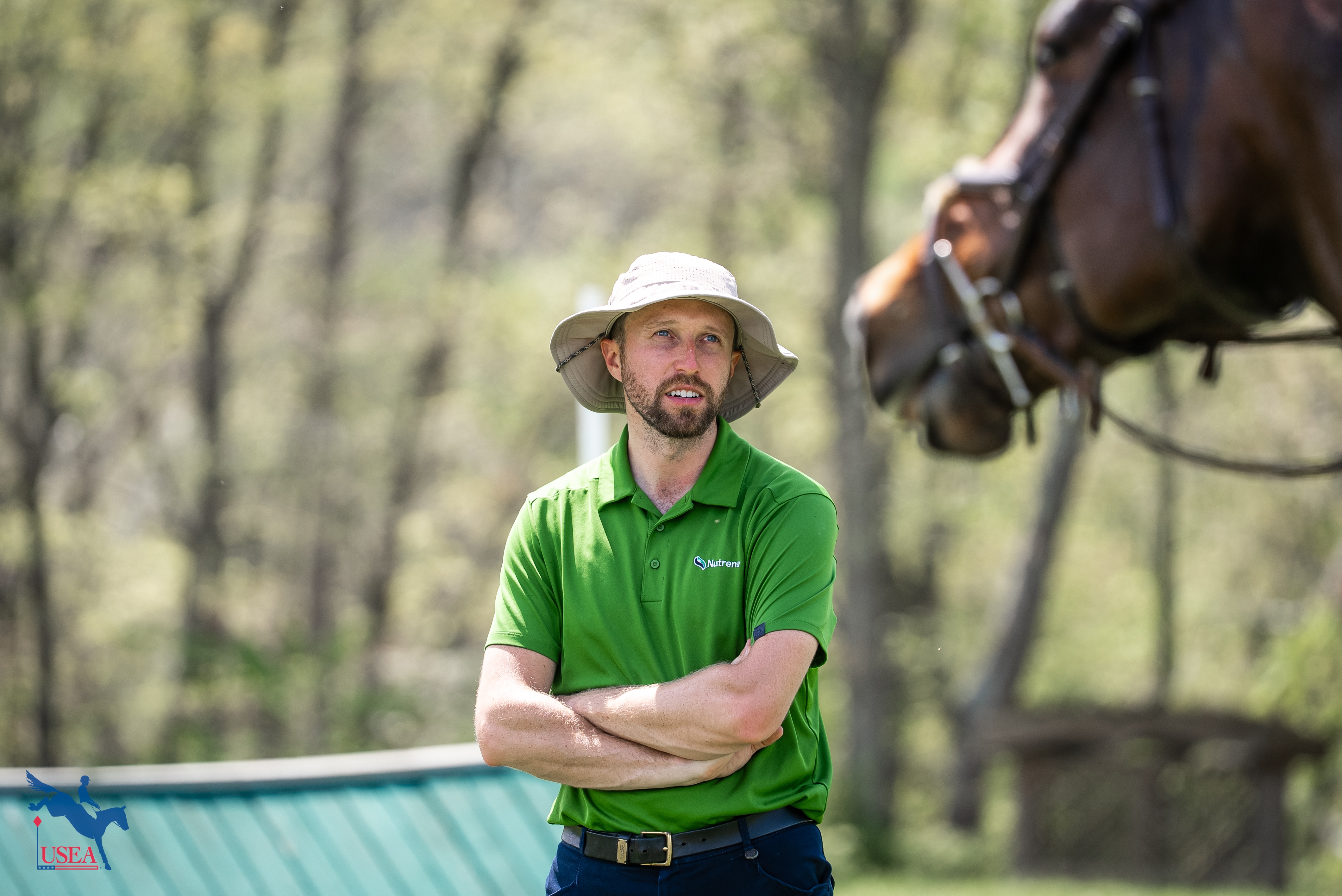
Willham appreciated hearing Dawson’s critiques and perspective.
“It's been kind of part riding clinic and just listening to her when she does her demo lessons—seeing how she looks at the horses, evaluates what she picks up on to fix, and what she feels is the most important thing to fix at that moment,” he said. “Some new perspectives are always interesting. It's good because there's so much nuance with horses, and there's so many different ways to do the same thing and get the same thing accomplished. The ECP program isn't about, you have to teach this way and do this step, and then this step—it's just having a foundation of what is correct teaching. But then each of the instructors kind of has their own experience and viewpoint on what they pick out and they help with, and that's kind of what we always get with riding lessons in clinics too—getting new perspectives for our riding.”
About the USEA Eventing Coaches Program (ECP)
Coaches are essential to the training of riders and horses for safe and educated participation in the sport of eventing. The USEA Eventing Coaches Program (ECP), formerly known as the Instructors’ Certification Program (ICP), was initiated in 2002 to educate all levels of eventing coaches with crucial training principles upon which they can continue to build throughout their teaching careers. ECP offers educational workshops and assessments by which both regular coaches, Level I through Level V, Young Event Horse (YEH) coaches, and Young Event Horse professional horse trainers can become ECP certified. Additional information about ECP’s goals, benefits, workshops, and assessments as well as names and contact information for current ECP certified coaches, YEH coaches, and YEH professional horse trainers are available on the USEA website. Click here to learn more about the USEA Eventing Coaches Program.
The USEA would like to thank Marshall+Sterling Equine Insurance, Stable Secretary, Strider, and the United States Pony Clubs, for their support of the Eventing Coaches Program.
Related Articles
Registration Now Open for 2026 USEA Annual Meeting & Convention and U.S. Eventing Hall of Fame Induction Ceremony in Arlington, Virginia
Registration is now open for the 2026 USEA Annual Meeting & Convention, which will include the U.S. Eventing Hall of Fame Induction Ceremony Dinner, on December 11-13 in Arlington, Virginia. Interested members are enco...
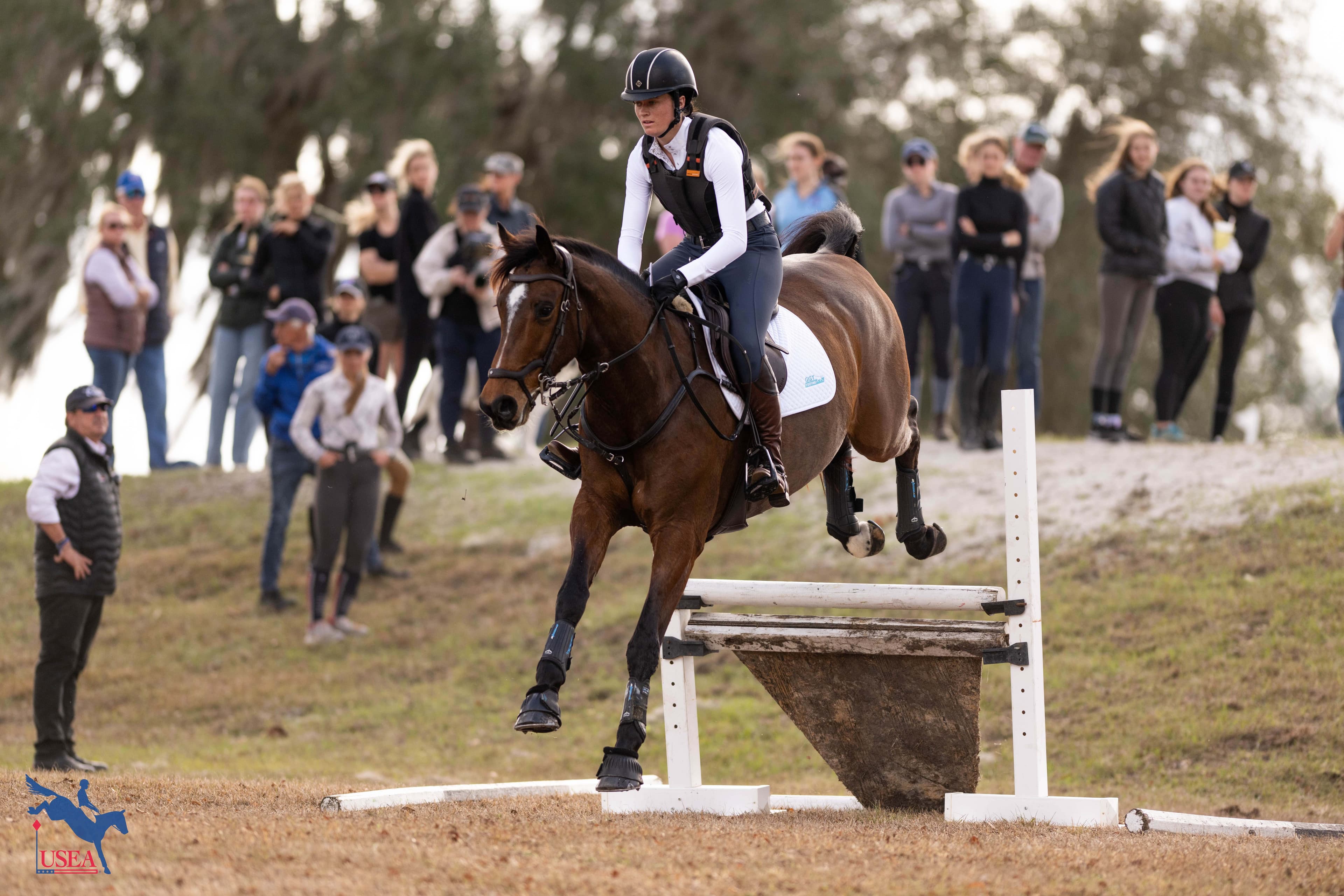
USEA Names Athletes for Winter 2026-2027 EA21 National Camp
The United States Eventing Association (USEA) is pleased to announce the 12 young athletes selected for the 2026-2027 USEA Emerging Athletes U21 (EA21) National Camp. Following five regional clinics held across the country this summer, these athletes have been invited to continue their developmen...
New Ways to Give Back to the USEA Programs You Love
The United States Eventing Association (USEA) is pleased to introduce a new way for members and supporters of the sport to give back to the programs that mean the most to them.