The Overlooked Impact of Respiratory Challenges in Eventing
In eventing, success depends on a horse’s ability to perform across three demanding phases. Riders invest heavily in fitness, strength, and rideability, yet one critical factor is often overlooked: respiratory efficiency.
A horse’s ability to take in and utilize oxygen directly affects performance, recovery, and consistency throughout an event. Unlike the heart and muscles, the lungs do not adapt to training or selective breeding, making them a primary limiting factor in equine athleticism.
Oxygen Demands Across the Three Phases
Each phase of eventing places unique demands on the respiratory system.
In dressage, limitations tend to show up subtly. Restrictions in airflow from tension, position, or equipment can affect a horse’s ability to stay soft, focused, and responsive.
On cross-country, respiratory efficiency becomes far more critical. Sustained galloping, terrain, and technical questions require consistent oxygen delivery to maintain rhythm and pace late on course. Small inefficiencies early can show up as fading impulsion or delayed recovery between efforts.
By show jumping, accuracy and power are tested after fatigue has set in. At this stage, even small inefficiencies in breathing can affect coordination, impulsion, and the ability to jump clean.
Across all phases, respiratory efficiency influences how well a horse performs under pressure.
Why Breathing Becomes a Limiting Factor
Horses are obligate nasal breathers, meaning all airflow must pass through the nasal passages. During exercise, negative pressure created to draw in air can cause the soft tissues of the nasal passages to partially collapse, increasing resistance.
At the canter and gallop, breathing is synchronized with stride at roughly 120–140 breaths per minute, leaving minimal time for oxygen exchange. As intensity increases, so does oxygen demand, which amplifies airway resistance and the effort required to breathe.
The result is not just a respiratory issue—it becomes a performance issue. Energy that would otherwise support locomotion is redirected toward ventilation. At peak effort, the respiratory muscles may consume a significant portion of the horse’s oxygen supply, contributing to earlier fatigue and reduced efficiency.
The Added Complexity of Jumping
Jumping introduces additional challenges to breathing.
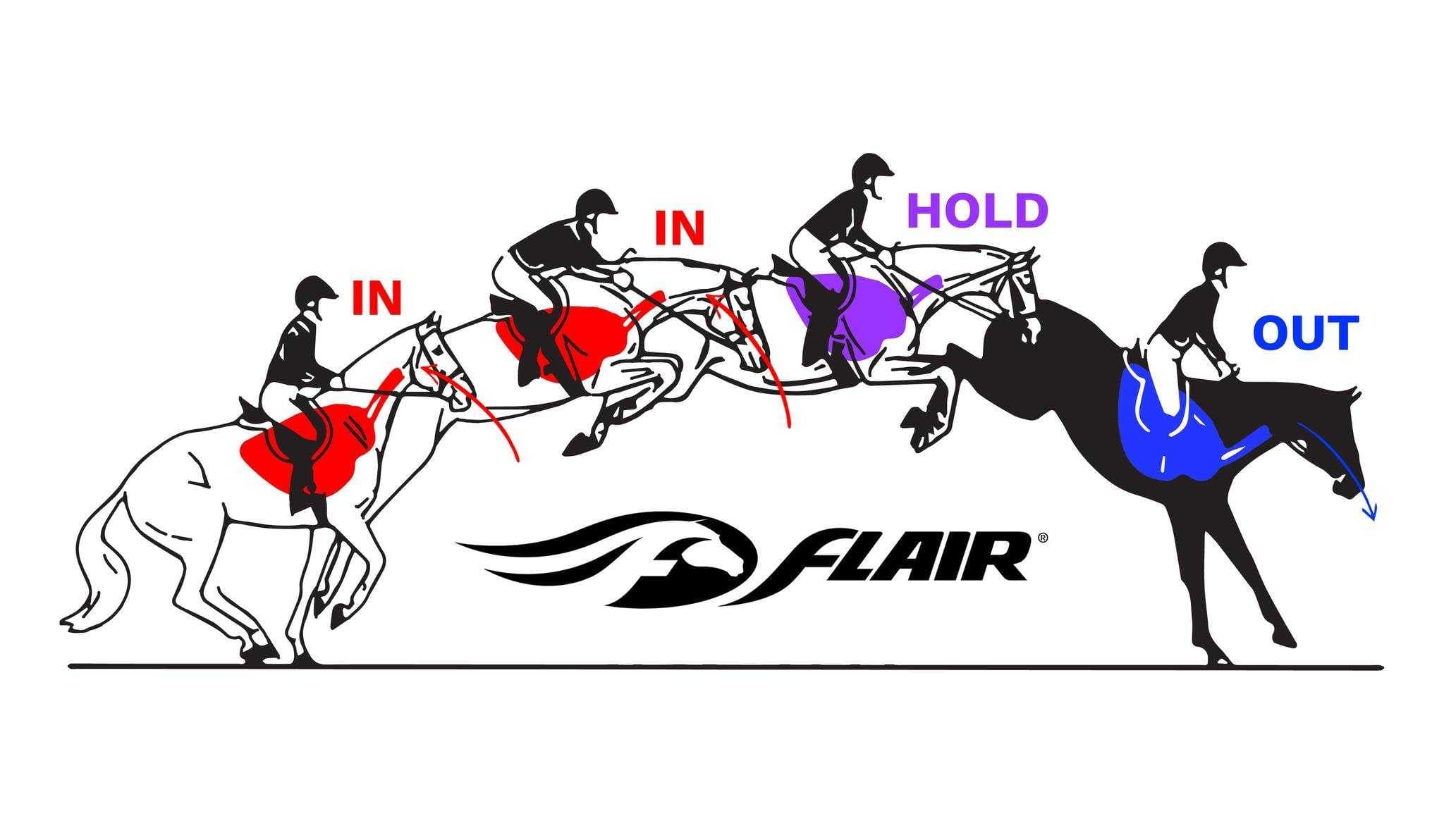
When a horse rounds its body over a fence, airway resistance increases. Horses also hold their breath mid-air, only resuming breathing upon landing. Over a course, this can account for a significant amount of time without airflow, making efficient oxygen intake between efforts critical.
On cross-country, these demands are intensified by speed, terrain, and distance, requiring consistent oxygen delivery while navigating technical combinations.
A Marginal Gain That Adds Up
In a sport where performance is often determined by small details, respiratory efficiency is one of the more overlooked variables.
It does not replace fitness, training, or rideability. But it influences all of them. A horse that can move air more efficiently is better able to maintain effort on cross-country, stay adjustable in the final phase, and recover more effectively between rides.
By understanding respiratory limitations and managing them effectively—through training, environment, and tools like FLAIR Strips, riders can support stronger, more consistent performances from start to finish.
FLAIR® Equine Nasal Strips support the nasal passages and reduce airway collapse during exercise. By stabilizing the soft tissues in the nostrils, FLAIR Strips lower resistance and improve airflow when it matters most. Note that FLAIR Strips are not currently allowed by FEI in dressage competition.
At this level of the sport, it is rarely one major change that defines performance—it is the accumulation of small, intentional decisions. Respiratory efficiency is one of those details that directly impacts every stride, every effort, and every phase. By recognizing its role and taking steps to support it, riders can help their horses perform with greater consistency, recover more effectively, and stay competitive over time.
Related Articles

Registration Now Open for 2026 USEA Annual Meeting & Convention and U.S. Eventing Hall of Fame Induction Ceremony in Arlington, Virginia
Registration is now open for the 2026 USEA Annual Meeting & Convention, which will include the U.S. Eventing Hall of Fame Induction Ceremony Dinner, on December 11-13 in Arlington, Virginia. Interested members are enco...
USEA Names Athletes for Winter 2026-2027 EA21 National Camp
The United States Eventing Association (USEA) is pleased to announce the 12 young athletes selected for the 2026-2027 USEA Emerging Athletes U21 (EA21) National Camp. Following five regional clinics held across the country this summer, these athletes have been invited to continue their developmen...
New Ways to Give Back to the USEA Programs You Love
The United States Eventing Association (USEA) is pleased to introduce a new way for members and supporters of the sport to give back to the programs that mean the most to them.